
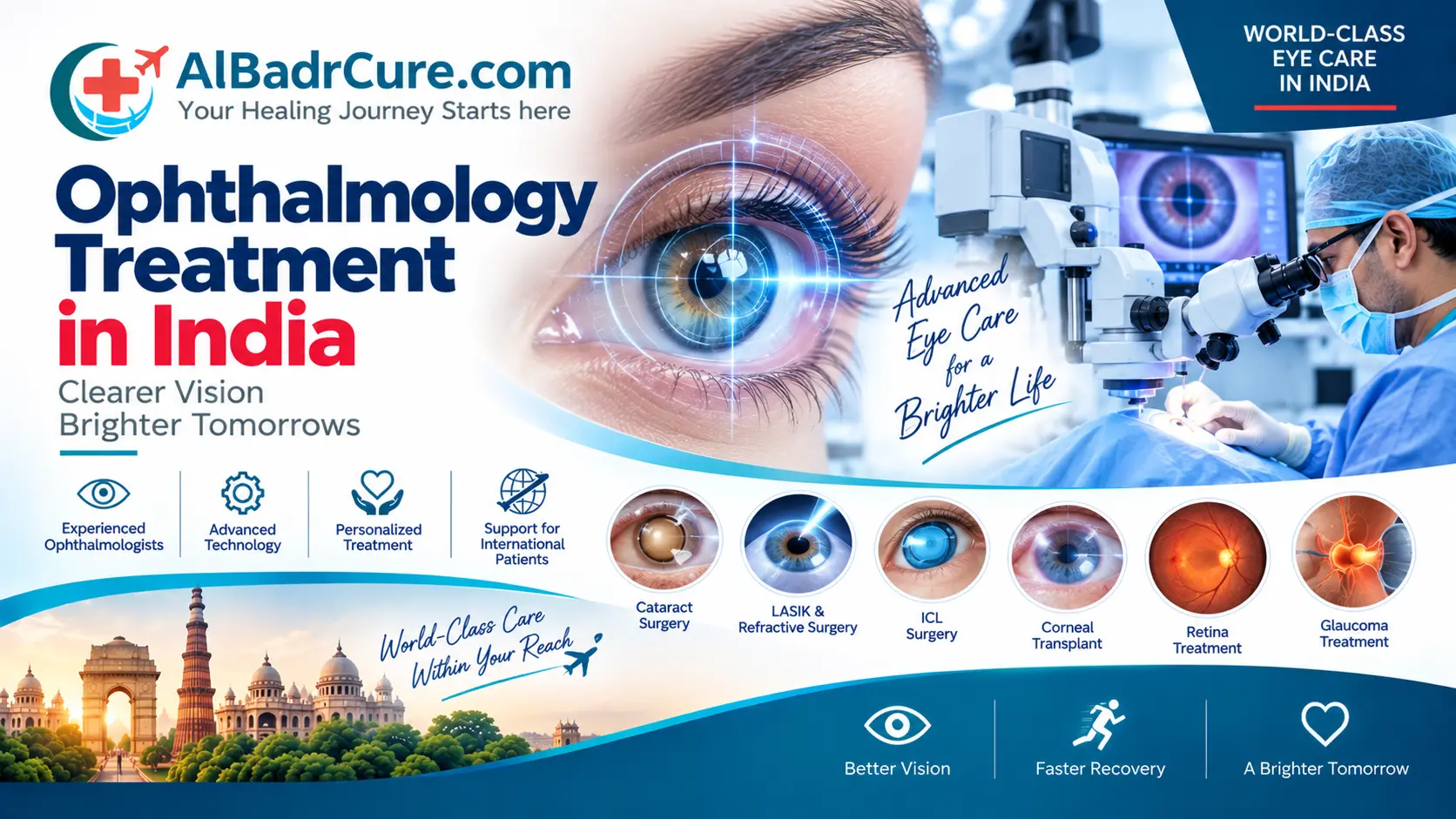
Ophthalmology treatment in India covers the diagnosis, medical management and surgical treatment of diseases affecting the eyes, optic nerve and surrounding structures. Modern ophthalmology centres offer comprehensive services ranging from cataract and refractive surgery to glaucoma, retinal, corneal, ocular oncology and paediatric eye care.
For international patients, treatment options may include phacoemulsification, LASIK, SMILE, ICL, corneal transplantation, retinal procedures, glaucoma surgery and oculoplastic surgery, depending on the diagnosis and suitability of the patient. (AIIMS)
Ophthalmology is a highly specialized medical field covering conditions of the cornea, lens, retina, optic nerve, glaucoma drainage system, eyelids, orbit and other structures of the eye.
Treatment can range from prescription medicines and laser procedures to microsurgery and advanced reconstructive techniques. The appropriate treatment depends on the patient's diagnosis, age, eye health, visual requirements and overall medical condition.
Modern Indian eye-care centres may provide dedicated services in cataract, refractive surgery, cornea, glaucoma, retina, ocular oncology, oculoplasty, neuro-ophthalmology and paediatric ophthalmology.
✔️ Helps preserve or restore vision
✔️ Treats cataract and other causes of visual impairment
✔️ Manages glaucoma and helps prevent further optic nerve damage
✔️ Treats retinal and corneal disorders
✔️ Corrects selected refractive errors
✔️ Provides surgical treatment for selected eye cancers and structural disorders
✔️ Advanced minimally invasive and laser procedures may reduce recovery time for appropriate patients
Cataract surgery removes the cloudy natural lens and replaces it with an artificial intraocular lens (IOL). Modern techniques include phacoemulsification, small-incision cataract surgery and, in selected cases, femtosecond laser-assisted cataract surgery. Different IOL options may be considered according to the patient's visual needs and ocular condition.
Laser vision correction reshapes the cornea to correct selected refractive errors such as myopia, hyperopia and astigmatism. Depending on eligibility, options may include LASIK, femtosecond LASIK, PRK, SMILE and other laser-based procedures.
An Implantable Collamer Lens (ICL) is placed inside the eye to correct certain refractive errors. It may be considered for patients who are not suitable candidates for corneal laser procedures, subject to detailed ophthalmic evaluation. (AIIMS)
Corneal transplantation replaces damaged or diseased corneal tissue with donor tissue. Depending on which layers of the cornea are affected, procedures may include:
Full-thickness keratoplasty
DALK
DMEK
Other selective corneal transplantation techniques
The appropriate technique depends on the location and nature of the corneal disease.
Glaucoma management aims to control eye pressure and protect the optic nerve. Treatment may involve medicines, laser procedures or surgery.
Surgical options can include:
Trabeculectomy
Glaucoma drainage devices
MIGS
Laser iridotomy
Laser trabeculoplasty
Combined cataract and glaucoma procedures
Retinal disorders may require medication, laser treatment or microsurgery depending on the condition.
Treatment options can include:
Retinal laser photocoagulation
Intravitreal injections
Vitrectomy
Retinal detachment surgery
These treatments may be used for conditions such as diabetic retinopathy, retinal tears, retinal detachment, macular disorders and retinal vascular disease.
Diabetes can damage the blood vessels of the retina and may threaten vision if advanced. Management may include blood-sugar control, intravitreal medication, laser treatment and vitrectomy when indicated.
Specialized eye-care centres may treat tumors involving the eye and surrounding structures. Depending on the type and location of the tumor, treatment can involve surgery, plaque brachytherapy, thermotherapy, radiosurgery or other multidisciplinary approaches. (AIIMS)
Oculoplastic surgery addresses disorders involving the eyelids, orbit and surrounding structures. Procedures may include:
Ptosis surgery
Eyelid reconstruction
Blepharoplasty
Orbital surgery
Surgery for selected orbital tumors
Children may require specialized assessment and treatment for conditions such as congenital cataract, childhood glaucoma, squint, hereditary eye disorders and retinopathy of prematurity.
Ophthalmology centres may diagnose and treat:
Cataract
Glaucoma
Myopia
Hyperopia
Astigmatism
Presbyopia
Corneal diseases
Keratoconus
Diabetic retinopathy
Retinal detachment
Age-related macular degeneration
Retinal vascular disorders
Dry eye disease
Eye infections
Ocular tumors
Squint and eye-movement disorders
Paediatric eye conditions
Eyelid and orbital disorders
Optic nerve disorders
The treatment pathway depends on the specific diagnosis and severity.
Eye drops, oral medicines, injections and other non-surgical therapies may be used for appropriate conditions.
Laser procedures can treat selected retinal, glaucoma and refractive conditions.
Microsurgical techniques are used for procedures involving the cornea, lens, retina and other delicate eye structures.
Small-incision techniques are used for many modern eye procedures, including cataract and selected glaucoma surgeries.
Oculoplastic and corneal reconstructive procedures can restore function or repair damaged ocular structures.
Treatment may be recommended to:
Restore or improve vision
Prevent further vision loss
Remove or replace a cloudy lens
Correct selected refractive errors
Control increased intraocular pressure
Repair retinal damage
Restore a diseased cornea
Treat ocular tumors
Correct eyelid or orbital abnormalities
Manage childhood eye disorders
Improve eye comfort and visual function
A comprehensive ophthalmic evaluation may include several specialized tests depending on the suspected condition.
Common investigations include:
Visual acuity testing
Refraction
Slit-lamp examination
Intraocular pressure measurement
Dilated retinal examination
Visual field testing
OCT — Optical Coherence Tomography
Fundus photography
Corneal topography/tomography
Ocular ultrasound
Fluorescein angiography
Biometry before cataract surgery
Electrophysiological testing in selected cases
Modern eye centres use technologies such as OCT, digital retinal imaging, corneal mapping, wavefront analysis and advanced ocular imaging to support diagnosis and treatment planning.
An ophthalmologist should evaluate persistent or unexplained visual symptoms such as:
Sudden vision loss, severe eye pain, flashes with a sudden shower of floaters, or an eye injury requires urgent ophthalmic assessment.
The process depends on the specific treatment, but a typical surgical pathway includes:
The ophthalmologist examines the eye and performs the investigations required to establish the diagnosis.
The specialist discusses available treatment options, expected benefits, limitations and potential risks.
For surgery, measurements such as corneal mapping, ocular biometry, retinal assessment or other investigations may be performed when required.
Many eye procedures use topical or local anaesthesia. General anaesthesia may be required for selected procedures, particularly some complex or paediatric surgeries.
The ophthalmologist performs the planned laser, microsurgical or surgical treatment using the technique appropriate for the patient's condition.
The patient is monitored and receives instructions regarding eye drops, protective measures, activity restrictions and follow-up visits.
OCT creates detailed cross-sectional images of structures such as the retina, macula and optic nerve and is widely used for diagnosis and monitoring.
Femtosecond laser technology is used in selected refractive and cataract procedures and can assist with precise tissue treatment.
These technologies map the shape and characteristics of the cornea and can assist with refractive surgery planning, keratoconus assessment and corneal procedures.
High-resolution retinal imaging helps document and monitor retinal and optic nerve conditions.
Intravitreal medications may be used for selected retinal conditions, including diabetic retinal disease, macular degeneration and retinal vascular disorders.
Recovery depends greatly on the procedure.
💊 LASIK/selected refractive procedures: Visual recovery can be relatively rapid, although stabilization varies between patients.
💊 Cataract surgery: Many patients experience visual improvement within days, while complete stabilization may take longer.
💊 Corneal transplantation: Recovery is generally longer and requires regular monitoring.
💊 Retinal surgery: Visual recovery may take weeks or months depending on the retinal condition and procedure.
💊 Glaucoma surgery: Follow-up is important to monitor eye pressure and healing.
Patients should use prescribed eye drops exactly as directed and attend all scheduled follow-up appointments.
Although many ophthalmic procedures are routinely performed, every treatment carries potential risks.
Possible complications include:
The specific risks should always be discussed with the treating ophthalmologist before a procedure.
India has developed a broad network of ophthalmology services covering cataract, refractive surgery, glaucoma, cornea, retina, ocular oncology, paediatric ophthalmology and oculoplasty. Major centres may combine specialist teams with advanced imaging, laser systems, microsurgical facilities and dedicated operating theatres.
Potential factors for international patients include:
Experienced ophthalmologists and subspecialists
Availability of advanced diagnostic technologies
Laser and microsurgical treatment options
Cataract and refractive surgery services
Corneal and retinal treatment facilities
Glaucoma and ocular oncology services
Multidisciplinary hospital infrastructure
International patient coordination
Potentially competitive treatment costs
Treatment availability, technology, surgeon expertise and pricing vary between hospitals, so patients should compare these factors for their specific condition.
International patients can begin the treatment process by sharing previous medical records, eye examination reports, imaging and prescriptions with the treating team.
AlBadrCure can assist with:
✔️ Medical record evaluation
✔️ Ophthalmologist consultation coordination
✔️ Hospital and specialist coordination
✔️ Treatment planning and cost estimates
✔️ Medical visa invitation assistance
✔️ Airport reception
✔️ Accommodation arrangements
✔️ Arabic/English language support
✔️ Hospital coordination
✔️ Post-treatment follow-up assistance
For complex eye conditions, obtaining a specialist review before travelling can help determine which investigations and treatment may be required.
Not every patient with poor vision needs surgery, and not every patient is suitable for LASIK or another laser procedure.
For example, a patient with cataract may require lens replacement, while a patient with glaucoma may primarily require pressure-lowering treatment. Similarly, retinal disease may require injections or laser therapy rather than conventional surgery.
Accurate diagnosis should therefore come before choosing a procedure.
Ophthalmology Treatment in India encompasses a comprehensive range of medical, laser and surgical solutions for conditions affecting vision and eye health. From cataract and refractive surgery to advanced corneal, retinal, glaucoma and ocular oncology procedures, treatment can be tailored to the patient's specific diagnosis.
For international patients, selecting an appropriately qualified ophthalmologist, a hospital with the required diagnostic and surgical facilities, and a clearly defined treatment plan are essential parts of the care journey.
This article is intended for general educational purposes and does not replace consultation with a qualified ophthalmologist. The appropriate treatment, surgical technique, recovery period and expected visual outcome vary from patient to patient. A comprehensive eye examination is required before making treatment decisions.
Our expert team at Albadrcure will personally assist you with:
Trusted by 20,000+ Patients Worldwide
Quick Response | Human Support | 100% Confidential
Fill the form to get a callback from our medical team!