
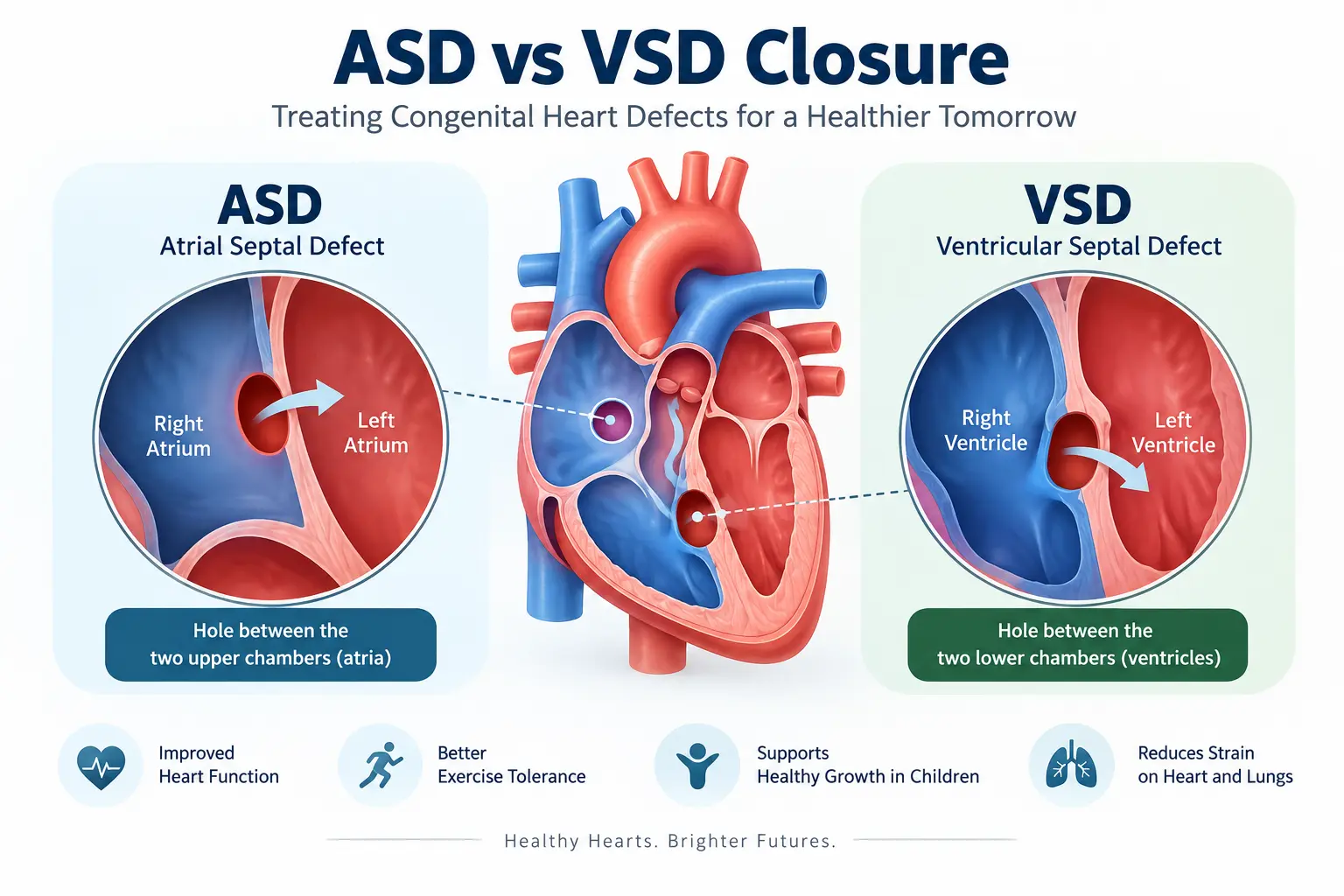
Atrial Septal Defect (ASD) and Ventricular Septal Defect (VSD) are congenital heart defects in which an abnormal opening develops in the wall, or septum, separating the heart chambers. Depending on the size, location, symptoms, and overall health of the patient, the defect may require monitoring, catheter-based closure, or surgical repair.
Closure treatment is designed to restore normal blood flow, reduce strain on the heart and lungs, and prevent potential long-term complications.
ASD: An opening between the heart’s two upper chambers (atria).
VSD: An opening between the heart’s two lower chambers (ventricles).
ASD can often be treated with a catheter-based device or surgery, depending on the type and size of the defect. VSD is commonly repaired surgically, although device closure may be suitable for selected cases.
ASD Device Closure: A catheter is introduced through a blood vessel, usually from the groin, and a specialized device is positioned to close the defect.
ASD Surgical Closure: For large defects or cases unsuitable for device closure, the opening can be closed using stitches or a surgical patch.
Surgical VSD Closure: Open-heart surgery is commonly used, with a patch placed over the defect.
VSD Device Closure: A catheter-based device may be considered for specific types and locations of VSD.
Catheter-based device closure
3D echocardiography for accurate assessment and sizing
Minimally invasive pediatric cardiac surgery
Advanced surgical patch materials and techniques
Successful closure, when medically indicated, can help:
✔️ Improve blood flow and heart function
✔️ Reduce strain on the heart and lungs
✔️ Improve exercise tolerance and energy levels
✔️ Support normal growth and development in children
✔️ Reduce the risk of certain long-term complications
Some patients may have few or no symptoms, particularly with smaller defects. Possible signs include:
Shortness of breath
Fatigue or reduced activity tolerance
Poor growth in children
Frequent respiratory or chest infections
Heart murmur
A catheter is inserted through a blood vessel, usually in the groin, and guided toward the heart. A specially designed closure device is then positioned across the ASD to seal the opening. Open-heart surgery is not required for suitable device-closure cases.
When the defect is too large, anatomically unsuitable for a device, or otherwise requires surgery, the opening is repaired using stitches or a patch.
VSD repair is commonly performed through surgery, where a patch is used to close the opening. Catheter-based device closure may be an option for selected VSDs depending on their location and anatomy.
Recovery varies according to the procedure, the patient's age and health, and the complexity of the defect.
Device closure: Typically around 1–3 days in hospital
Surgical closure: Typically around 5–7 days in hospital
Overall recovery: Often takes several weeks
Follow-up: Regular cardiac evaluation and echocardiography may be recommended
As with any cardiac procedure, potential risks may include:
Bleeding
Infection
Heart rhythm disturbances
Device-related complications in catheter-based procedures
Other procedure-specific complications
The treating cardiologist or cardiac surgeon evaluates these risks based on the patient's individual condition.
India has established centres for pediatric and congenital cardiac care, offering catheter-based interventions, advanced cardiac imaging, minimally invasive techniques, and surgical treatment. International patients may also have access to multidisciplinary consultations and dedicated medical-tourism support, depending on the hospital.
Not every ASD or VSD requires immediate closure. The decision depends on factors such as:
Size and location of the defect
Amount of abnormal blood flow
Effects on the heart and lungs
Presence and severity of symptoms
Patient's age and overall health
Suitability for device-based or surgical closure
A pediatric cardiologist or congenital heart specialist should determine whether closure is required and which treatment approach is appropriate.
ASD and VSD closure are established treatments for selected congenital heart defects. Device-based closure can provide a less invasive option for suitable patients, while surgical repair remains important for defects that cannot be safely treated with a catheter-based approach. Early evaluation and appropriate follow-up can help manage the condition and protect long-term heart health.
Our expert team at Albadrcure will personally assist you with:
Trusted by 20,000+ Patients Worldwide
Quick Response | Human Support | 100% Confidential
Fill the form to get a callback from our medical team!