
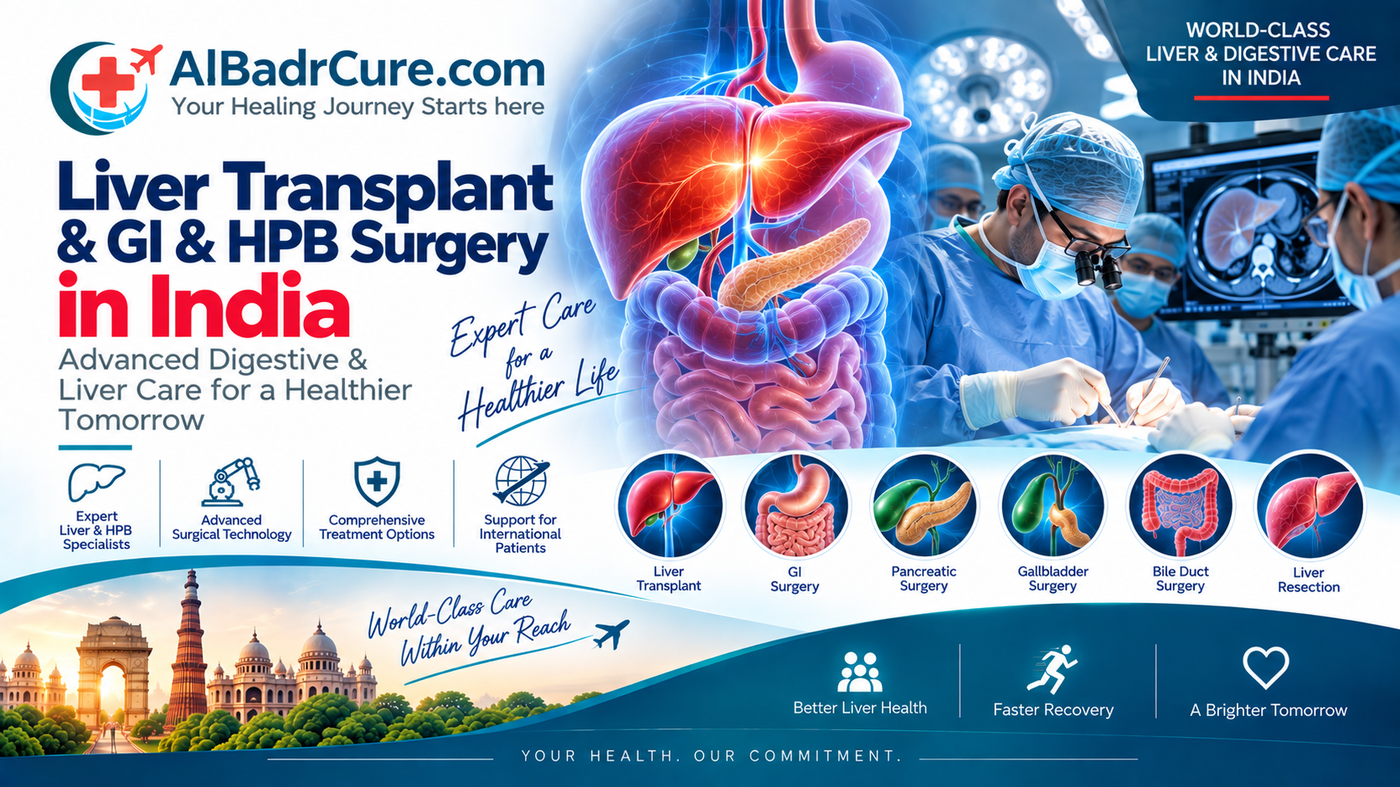
Liver Transplant and GI & HPB Surgery in India covers highly specialized treatment for diseases affecting the liver, pancreas, gallbladder, bile ducts and gastrointestinal tract. The field combines hepatology, liver transplantation, gastrointestinal surgery, hepatobiliary and pancreatic surgery, oncology, interventional radiology and critical care to manage complex medical and surgical conditions.
India has established dedicated liver-transplant and HPB centres offering living-donor and deceased-donor transplantation, pediatric transplantation, complex liver resections, pancreatic surgery, biliary reconstruction and minimally invasive procedures.
For international patients, the treatment pathway generally begins with a detailed review of medical records, imaging and laboratory investigations before the appropriate transplant or GI/HPB specialist is selected.
Treatment Type: Medical, Surgical, Transplant & Minimally Invasive
Specialty: Liver Transplant, GI Surgery & Hepato-Pancreato-Biliary (HPB) Surgery
Hospital Stay: Several days to a few weeks, depending on the procedure
Recovery: Several weeks to several months for major surgery or transplantation
Anaesthesia: Usually general anaesthesia for major surgical procedures
The GI (Gastrointestinal) system includes the digestive tract, while HPB (Hepato-Pancreato-Biliary) surgery focuses primarily on the liver, pancreas, gallbladder and bile ducts.
This specialty manages conditions ranging from gallstones and benign liver lesions to complex cancers and end-stage liver disease.
Liver transplantation involves replacing a diseased or failed liver with a healthy liver or an appropriate portion of a donor liver. It may be considered for selected patients with end-stage liver disease or acute liver failure when other treatment options are no longer sufficient.
✔️ Provides a treatment option for selected patients with end-stage liver disease
✔️ Can restore liver function after successful transplantation
✔️ Treats complex liver, pancreatic and biliary diseases
✔️ Enables surgical removal of selected liver and GI tumors
✔️ Provides specialized care for pediatric and adult liver disease
✔️ Minimally invasive techniques may reduce incision size and facilitate recovery in suitable patients
✔️ Allows multidisciplinary management of complex gastrointestinal and HPB conditions
In a Living Donor Liver Transplant (LDLT), a suitable portion of the liver from a carefully evaluated living donor is transplanted into the recipient.
Both donor and recipient undergo extensive medical evaluation before transplantation. The donor's safety is a fundamental consideration, and transplantation proceeds only when the donor meets the applicable medical and regulatory requirements.
A Deceased Donor Liver Transplant (DDLT) uses a liver donated after death. Eligible patients are registered through the applicable organ-transplant system and allocated organs according to prevailing medical and regulatory criteria.
In selected circumstances, a donor liver can be divided so that portions can be transplanted into more than one recipient. Split-liver transplantation can be particularly relevant to pediatric transplantation and selected adult cases.
Children with severe liver disease, metabolic disorders, congenital conditions or other indications may require liver transplantation.
Pediatric transplantation requires specialized pediatric hepatology, transplant surgery, anesthesia, intensive care, nutrition and long-term follow-up.
In selected patients experiencing irreversible failure of a previous liver graft, re-transplantation may be considered after detailed assessment of the medical risks and potential benefits.
A liver resection removes part of the liver affected by a tumor, metastasis or selected benign disease while preserving adequate functioning liver tissue.
Depending on the condition and anatomy, surgery may be open, laparoscopic or robotic in appropriately selected patients.
The pancreaticoduodenectomy, commonly called the Whipple procedure, is a complex operation used primarily for selected tumors and diseases involving the head of the pancreas and nearby structures.
The operation may involve removal of the pancreatic head, duodenum, gallbladder and part of the bile duct, followed by reconstruction of the digestive and biliary pathways.
Pancreatic operations may be required for selected pancreatic cancers, cystic lesions, chronic pancreatitis and other pancreatic disorders.
Procedures may include:
Whipple procedure
Distal pancreatectomy
Total pancreatectomy in selected cases
Cyst or tumor resection
Complex pancreatic reconstruction
Cholecystectomy is commonly performed for symptomatic gallstone disease and selected gallbladder conditions.
Complex gallbladder cancers may require more extensive HPB surgery involving the liver and bile ducts.
Biliary surgery addresses disorders affecting the bile ducts, including selected tumors, strictures, injuries and complex obstruction.
Procedures may include biliary reconstruction, bile duct resection and selected bypass procedures.
Reconstructive procedures may be necessary after bile duct injury, complex strictures or tumor surgery. The exact reconstruction depends on the location and extent of the biliary problem.
GI surgical oncology covers cancers involving:
Esophagus
Stomach
Small intestine
Colon
Rectum
Liver
Pancreas
Gallbladder
Bile ducts
Complex cancer cases may be discussed by a multidisciplinary team involving surgeons, oncologists, radiologists, pathologists and other specialists.
Selected liver, pancreatic, biliary and gastrointestinal operations can be performed using laparoscopic or robotic-assisted techniques.
These approaches may offer smaller incisions and potentially facilitate recovery in appropriately selected patients, but they are not suitable for every case.
Liver transplant and GI/HPB centres may treat:
End-stage liver disease
Liver cirrhosis
Acute liver failure
Selected metabolic liver disorders
Hepatocellular carcinoma
Selected metastatic liver tumors
Pancreatic cancer
Pancreatic cystic and benign tumors
Chronic pancreatitis
Gallbladder cancer
Bile duct cancer
Biliary strictures
Gallstones and complex gallbladder disease
Liver tumors
Bile duct injuries
Gastrointestinal cancers
Complex GI surgical conditions
The suitability of transplantation or surgery depends on the individual diagnosis, disease stage, liver function, overall health and other clinical factors.
A suitable portion of a living donor's liver is transplanted into the recipient following detailed donor and recipient evaluation.
A liver from a deceased donor is allocated to an eligible recipient through the applicable organ-allocation system.
A donor liver may be divided for transplantation into two recipients in selected circumstances.
Specialized transplantation designed for children with severe liver disease or other appropriate indications.
Treatment may be recommended to:
Replace a severely diseased or failed liver
Treat selected liver cancers
Remove tumors from the liver, pancreas or gastrointestinal tract
Treat selected pancreatic diseases
Remove diseased gallbladder or bile duct structures
Relieve biliary obstruction
Repair complex bile duct injuries or strictures
Treat selected gastrointestinal cancers
Restore or reconstruct digestive and biliary pathways
Manage conditions that cannot be adequately treated with non-surgical methods
Evaluation depends on the suspected condition and may involve several specialties.
Patients being considered for transplantation may undergo:
Liver function tests
Kidney function tests
Blood-group testing
Viral and infection screening
Coagulation studies
Ultrasound
CT or MRI
Tumor evaluation where applicable
Cardiac and pulmonary assessment
Nutritional assessment
Donor evaluation for living-donor transplantation
NOTTO guidance describes multidisciplinary transplant teams involving transplant surgeons, hepatologists, anesthesiologists, intensivists and supporting specialists. (Notto)
Depending on the condition, investigations may include:
Blood tests
Liver function tests
Ultrasound
CT scan
MRI/MRCP
Endoscopy
Colonoscopy
ERCP
Endoscopic ultrasound (EUS)
PET-CT for selected cancers
Image-guided biopsy
Modern transplant and HPB programmes may combine advanced imaging with endoscopic procedures such as EUS, ERCP and biliary stenting for diagnosis and treatment planning.
Possible symptoms of liver, pancreatic, biliary or GI disease include:
⚠️ Yellowing of the eyes or skin
⚠️ Persistent abdominal pain
⚠️ Abdominal swelling
⚠️ Unexplained weight loss
⚠️ Persistent nausea or vomiting
⚠️ Loss of appetite
⚠️ Changes in bowel habits
⚠️ Blood in stool or vomiting blood
⚠️ Dark urine or unusually pale stools
⚠️ Persistent itching associated with liver or bile-duct disease
⚠️ Recurrent episodes of jaundice
⚠️ Confusion or altered consciousness in advanced liver disease
Severe abdominal pain, vomiting blood, significant gastrointestinal bleeding, severe jaundice, confusion or sudden deterioration requires urgent medical assessment.
Liver transplantation is a highly complex procedure requiring coordinated work between multiple specialist teams.
The patient's liver disease, general health, cancer status where applicable and transplant suitability are assessed.
For living-donor transplantation, the potential donor undergoes detailed medical and anatomical evaluation. Donor safety remains a central consideration.
The transplant team determines whether living-donor or deceased-donor transplantation is appropriate and addresses blood group, anatomy and other clinical considerations.
During transplantation, the patient's diseased liver is removed.
The donor liver or appropriate graft portion is placed in the recipient and connected to the major blood vessels and bile duct.
The patient is monitored closely in a specialized ICU for liver function, circulation, infection and other complications.
Transplant recipients require ongoing medical monitoring and immunosuppressive treatment to reduce the risk of graft rejection.
CT, MRI and other imaging techniques help surgeons evaluate liver anatomy, tumor location, vascular involvement and the amount of liver that can safely remain after resection.
Selected liver, pancreatic and biliary procedures can be performed using robotic systems. The approach depends on the disease, anatomy, surgical complexity and available expertise.
Laparoscopic techniques are increasingly used for selected GI and HPB operations and may reduce incision size and facilitate recovery in appropriately selected patients.
Endoscopic Retrograde Cholangiopancreatography (ERCP) and Endoscopic Ultrasound (EUS) can provide important diagnostic and therapeutic options for selected pancreatic and biliary disorders.
Complex GI and HPB cancers may require coordinated treatment involving surgery, medical oncology, radiation oncology, interventional radiology and pathology.
Recovery varies significantly according to the treatment.
Patients generally require an extended hospital stay followed by regular outpatient monitoring. Recovery continues over several months, with gradual nutritional and physical rehabilitation.
Long-term care includes regular blood tests, liver-function monitoring and medication management.
Procedures such as a Whipple operation or major liver resection can require several weeks of recovery. Some patients may temporarily require nutritional support, drains or other postoperative interventions.
Selected laparoscopic or robotic procedures may involve smaller incisions and potentially shorter recovery than comparable open procedures, although recovery still depends on the complexity of the operation.
💊 Immunosuppressive medicines are generally required to help prevent rejection.
💊 Regular laboratory monitoring is essential.
💊 Patients need ongoing infection monitoring because immunosuppression can increase susceptibility to infections.
💊 Diet, physical activity and medication schedules should be followed according to the transplant team's recommendations.
Both transplantation and major GI/HPB surgery carry significant potential risks.
⚠️ Bleeding
⚠️ Infection
⚠️ Blood-vessel complications
⚠️ Bile-duct complications
⚠️ Graft dysfunction or failure
⚠️ Rejection
⚠️ Kidney dysfunction
⚠️ Medication-related complications
⚠️ Need for additional intervention or, in selected cases, re-transplantation
Immunosuppressive medicines also increase susceptibility to infections and can have other long-term side effects.
⚠️ Bleeding
⚠️ Infection
⚠️ Bile leak
⚠️ Pancreatic leak or fistula
⚠️ Blood clots
⚠️ Digestive complications
⚠️ Delayed gastric emptying after selected pancreatic operations
⚠️ Liver dysfunction
⚠️ Need for additional procedures
The specific risk profile depends heavily on the operation and the patient's underlying condition.
India has developed specialized centres providing adult and pediatric liver transplantation, GI oncology, HPB surgery, minimally invasive surgery and multidisciplinary liver care. International-patient programmes at major hospitals also advertise adult and pediatric living- and deceased-donor transplantation along with GI oncologic and robotic GI surgery.
Potential factors for international patients include:
Specialized liver transplant teams
Adult and pediatric transplant programmes at selected centres
Living- and deceased-donor transplantation
Dedicated transplant ICUs
Advanced liver and GI imaging
GI and HPB surgical specialists
Laparoscopic and robotic surgery at selected centres
Multidisciplinary cancer care
Endoscopic and interventional procedures
International patient coordination
Potentially competitive treatment costs
The availability of transplantation, donor options, specific surgical techniques, waiting times and costs varies between centres and individual cases.
There is no single standard cost for liver transplantation or complex GI/HPB surgery.
The final treatment cost can depend on:
Type of transplant
Living or deceased donor pathway
Patient's disease severity
Hospital and city
Surgical complexity
ICU requirements
Diagnostic investigations
Duration of hospitalization
Complications
Transplant medicines
Follow-up requirements
For GI/HPB surgery, the cost also depends on whether the procedure is open, laparoscopic or robotic and whether additional cancer treatment is required.
For international patients, AlBadrCure can coordinate a case-specific treatment estimate after the patient's medical records have been reviewed by the treating hospital.
International patients can begin the process remotely by sharing:
Medical history
Recent blood reports
CT/MRI scans and reports
Liver function tests
Previous biopsy reports
Endoscopy reports
Current medications
Previous treatment details
AlBadrCure can assist with:
✔️ Medical record evaluation
✔️ Liver transplant specialist consultation
✔️ GI & HPB surgeon coordination
✔️ Second-opinion coordination
✔️ Donor evaluation coordination
✔️ Hospital and treatment planning
✔️ Treatment cost estimates
✔️ Medical visa invitation assistance
✔️ Airport reception
✔️ Accommodation arrangements
✔️ Arabic/English language support
✔️ Hospital coordination
✔️ Post-operative and follow-up assistance
For transplantation, donor eligibility and acceptance must ultimately be determined by the authorized transplant centre according to applicable medical and regulatory requirements.
The complexity of liver transplantation and HPB surgery makes specialist expertise and hospital infrastructure particularly important.
Patients should consider:
Experience of the transplant/HPB team
Adult or pediatric transplant capability
Living- and deceased-donor programme availability
Dedicated transplant ICU
Availability of hepatology and transplant surgery
Interventional radiology and endoscopy
GI oncology support
24-hour critical care
Infection-control facilities
Long-term follow-up arrangements
NOTTO's transplant manual emphasizes multidisciplinary staffing, dedicated transplant infrastructure, intensive-care capability, imaging and endoscopic facilities as important components of a liver-transplant programme.
These treatments address different clinical situations.
Liver Transplant: Replaces a severely diseased or failed liver when transplantation is medically appropriate.
Liver Resection: Removes a portion of the liver containing a tumor or other disease while preserving sufficient functioning liver.
HPB Surgery: Treats diseases of the liver, pancreas, gallbladder and bile ducts through procedures such as tumor resection, Whipple surgery and biliary reconstruction.
GI Surgery: Treats diseases of the digestive tract, including selected cancers and other surgical disorders.
Some patients may require more than one specialty—for example, a patient with advanced liver or biliary cancer may require coordinated surgical, oncology and transplant assessment.
Liver Transplant & GI & HPB Surgery Treatment in India provides a comprehensive pathway for patients with advanced liver disease, liver tumors, pancreatic disorders, biliary diseases and complex gastrointestinal conditions.
From living-donor and deceased-donor liver transplantation to liver resection, Whipple surgery, pancreatic procedures, biliary reconstruction and minimally invasive GI/HPB surgery, treatment can be tailored to the patient's diagnosis and clinical requirements.
For international patients, the most important steps are obtaining an accurate diagnosis, undergoing appropriate specialist evaluation and selecting a transplant or HPB centre with the necessary surgical, intensive-care and long-term follow-up infrastructure.
This article is intended for general educational purposes and does not replace consultation with a qualified hepatologist, transplant surgeon or GI/HPB surgeon. Liver transplantation and complex HPB procedures involve significant risks, and eligibility, donor suitability, treatment approach, hospital stay and recovery vary from patient to patient. A specialist evaluation is required before making treatment decisions.
Our expert team at Albadrcure will personally assist you with:
Trusted by 20,000+ Patients Worldwide
Quick Response | Human Support | 100% Confidential
Fill the form to get a callback from our medical team!