
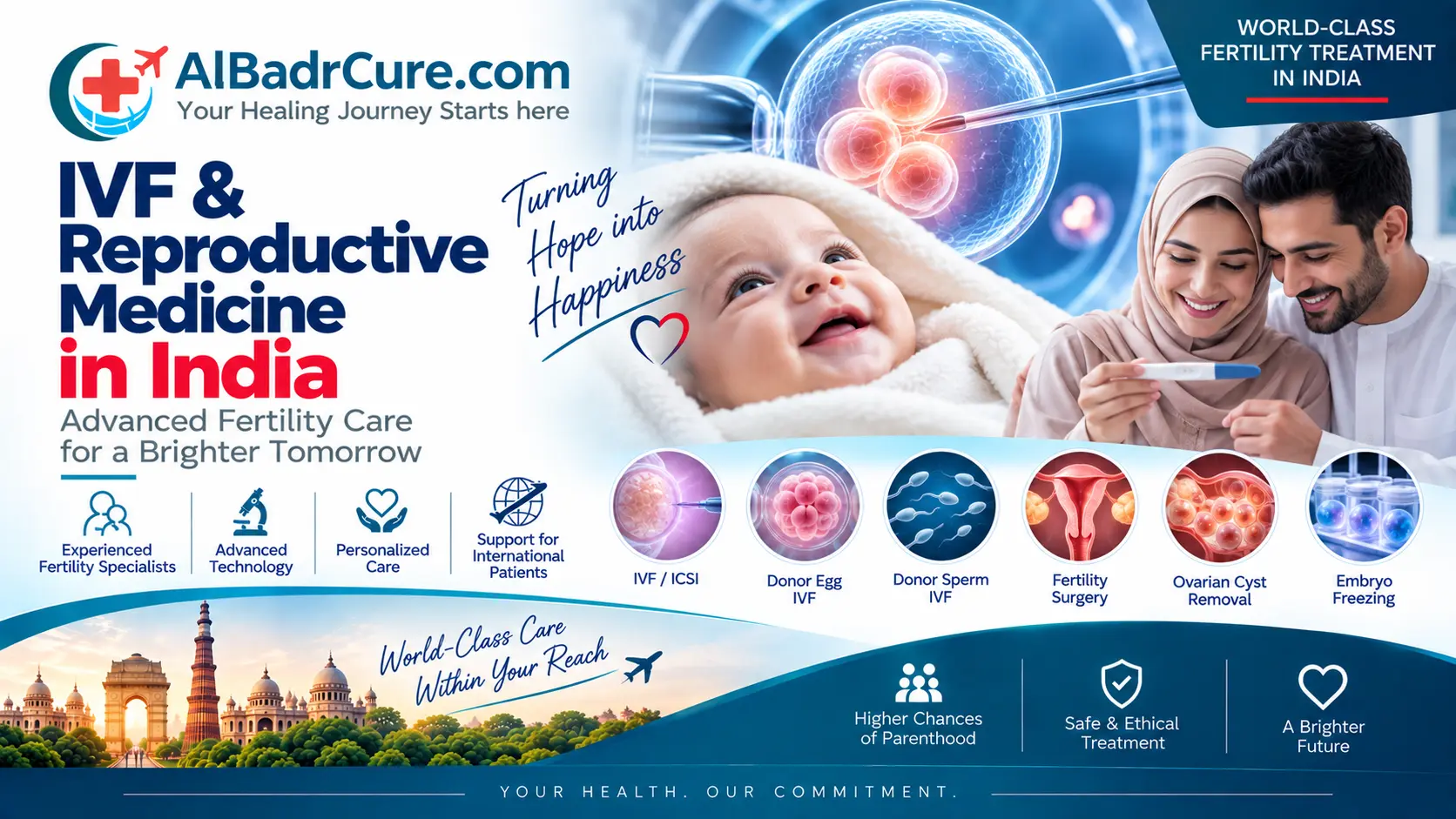
IVF and Reproductive Medicine treatment in India includes the evaluation and management of female-factor, male-factor, combined and unexplained infertility. Modern fertility centres provide treatments ranging from ovulation management and intrauterine insemination (IUI) to IVF, ICSI, embryo cryopreservation and fertility surgery.
Infertility is clinically defined by the World Health Organization as failure to achieve pregnancy after 12 months or more of regular unprotected intercourse, and it may result from male, female, combined or unexplained factors. WHO estimates that approximately 1 in 6 people of reproductive age experience infertility during their lifetime.
In India, assisted reproductive technology is regulated under the Assisted Reproductive Technology (Regulation) Act, 2021 and associated rules, which govern ART clinics and banks and are intended to promote safe and ethical ART practice.
Reproductive medicine focuses on identifying why pregnancy is not occurring and choosing treatment according to the underlying cause.
Infertility can arise from conditions involving the ovaries, uterus, fallopian tubes or endocrine system, while male infertility may involve sperm production, sperm function, reproductive-tract obstruction or hormonal abnormalities. In some cases, no clear cause is identified.
Treatment therefore does not always begin with IVF. Depending on the diagnosis, care may progress from lifestyle and fertility guidance to medication, IUI, fertility surgery or more advanced assisted reproduction such as IVF or ICSI. WHO's 2025 infertility guideline emphasizes this individualized, stepwise approach.
✔️ Provides treatment options for both female and male infertility
✔️ Enables fertilization outside the body through IVF
✔️ ICSI can assist in selected cases of male-factor infertility
✔️ Allows embryos to be cryopreserved for possible future treatment
✔️ Fertility surgery can correct selected structural abnormalities
✔️ Offers options for fertility preservation in appropriate circumstances
✔️ Provides individualized treatment according to age, ovarian reserve, semen parameters and diagnosis
During IVF, the ovaries are stimulated to develop multiple follicles. Eggs are then retrieved and combined with sperm in an embryology laboratory. Resulting embryos are cultured before an appropriate embryo is transferred to the uterus.
IVF may be considered for conditions including tubal-factor infertility, selected ovulation disorders, endometriosis, male-factor infertility and unexplained infertility, depending on the individual case.
Intracytoplasmic Sperm Injection (ICSI) is a laboratory technique in which an embryologist injects a single selected sperm directly into an egg.
It can be particularly useful in selected male-factor infertility cases and in other circumstances where conventional fertilization may be less appropriate.
IUI involves preparing sperm and placing it directly into the uterus around the time of ovulation.
It may be considered for selected patients with ovulatory problems, ejaculation difficulties or unexplained infertility, among other indications.
Embryos preserved from a previous IVF cycle can be thawed and transferred during a later cycle.
The uterine lining is prepared and monitored before the embryo transfer according to the treatment protocol.
Modern cryopreservation techniques allow eggs, sperm or embryos to be stored for potential future reproductive use.
Fertility preservation may be considered before treatments that could impair fertility, such as certain cancer therapies, as well as in other medically appropriate circumstances.
Storage and use of gametes and embryos in India are subject to the country's ART regulatory framework.
Donor eggs or sperm may be considered in specific circumstances when treatment with a patient's own gametes is not clinically appropriate or feasible.
Donor programmes in India are regulated, and eligibility, sourcing, consent and use must comply with applicable ART laws and regulations.
Some anatomical causes of infertility may benefit from surgical treatment.
Procedures can include:
Hysteroscopic surgery
Laparoscopic fertility surgery
Selected fibroid surgery
Treatment of uterine abnormalities
Surgery for selected endometriosis
Tubal surgery in appropriate cases
Whether surgery improves the chance of pregnancy depends on the underlying condition.
Not every ovarian cyst requires surgery. When removal is medically indicated, minimally invasive laparoscopic surgery may be considered depending on cyst characteristics, symptoms and concern for complications.
For patients planning pregnancy, the effect of surgery on healthy ovarian tissue and ovarian reserve should be considered carefully.
Reproductive medicine may address:
Ovulation disorders
Polycystic ovary syndrome (PCOS)
Blocked or damaged fallopian tubes
Endometriosis
Reduced ovarian reserve
Uterine abnormalities
Selected fibroids or polyps
Male-factor infertility
Low sperm count
Reduced sperm motility
Abnormal sperm morphology
Reproductive-tract obstruction
Unexplained infertility
Recurrent reproductive problems requiring specialist evaluation
Fertility preservation needs
WHO notes that infertility may result from abnormalities involving the ovaries, uterus, fallopian tubes and endocrine system, as well as male reproductive-tract obstruction, hormonal problems and abnormalities of sperm production or function. (World Health Organization)
Medication may be used to regulate or stimulate ovulation in appropriate patients.
Prepared sperm is placed directly into the uterus near ovulation.
Eggs and sperm are combined outside the body, followed by embryo culture and transfer.
A single sperm is injected directly into an egg to attempt fertilization.
Hysteroscopic or laparoscopic procedures may treat selected anatomical conditions affecting fertility.
Egg, sperm or embryo cryopreservation may be considered for appropriate medical or reproductive indications.
Evaluation may be appropriate for couples who have not achieved pregnancy after 12 months of regular unprotected intercourse.
Earlier specialist assessment may be appropriate in some circumstances—for example, when there is a known reproductive disorder or another clinical reason not to delay evaluation.
Potential indications include:
Irregular or absent ovulation
Tubal obstruction
Endometriosis
Reduced ovarian reserve
Significant male-factor infertility
Certain uterine abnormalities
Previous reproductive surgery
Unexplained infertility
Need for fertility preservation
The decision to proceed to IVF should be based on the diagnosis rather than simply the duration of infertility.
A fertility assessment should generally evaluate both partners, because infertility may involve female factors, male factors, both or remain unexplained. (World Health Organization)
Depending on the clinical situation, investigations may include:
Medical and reproductive history
Menstrual and ovulation assessment
Pelvic ultrasound
Ovarian reserve assessment
Hormonal tests
Thyroid and other endocrine investigations when indicated
Assessment of the uterus
Evaluation of fallopian-tube patency
Hysteroscopy in selected cases
Assessment may include:
Medical and reproductive history
Semen analysis
Physical examination when appropriate
Hormonal investigations
Ultrasound in selected cases
Genetic testing where clinically indicated
Additional sperm-related investigations in selected patients
A detailed diagnosis helps avoid unnecessary treatment and allows the fertility specialist to choose an appropriate strategy.
A typical IVF cycle involves several stages.
Both partners undergo appropriate evaluation to identify potential causes of infertility.
Hormonal medication is given to encourage multiple follicles to develop.
Ultrasound scans and, when appropriate, blood tests are used to monitor follicular development and determine the timing of egg retrieval.
Mature eggs are collected from the ovaries using an ultrasound-guided procedure, usually under sedation or anaesthesia.
The retrieved eggs are fertilized using conventional IVF or ICSI according to the clinical and laboratory plan.
Fertilized eggs are cultured in the embryology laboratory while their development is monitored.
An appropriate embryo is transferred into the uterus using a thin catheter.
Medication may be prescribed to support the uterine lining after embryo transfer.
A blood pregnancy test is performed at the time recommended by the fertility clinic.
Suitable additional embryos may be frozen for potential future use, subject to consent, clinical suitability and applicable regulations.
ICSI enables direct injection of a single sperm into an egg and is particularly relevant to selected male-factor infertility cases.
Rapid cryopreservation techniques are used to preserve embryos and eggs for possible future use.
Embryos may be cultured for several days until the blastocyst stage when clinically appropriate before transfer or cryopreservation.
PGT may be considered in specific clinical situations. It is not required for every IVF patient, and its appropriateness should be discussed with a reproductive-medicine specialist and, where relevant, a genetic counsellor.
IVF laboratories require controlled environments and specialized equipment for handling gametes, fertilization and embryo culture. In India, ART clinics and banks operate within a statutory regulatory framework.
IVF does not guarantee pregnancy or live birth.
The likelihood of success varies substantially according to factors such as:
Age
Ovarian reserve
Egg and sperm factors
Cause and duration of infertility
Embryo characteristics
Uterine factors
Previous IVF history
Other medical conditions
For this reason, patients should be cautious about comparing clinics solely through advertised "success rates." The population treated and the outcome being reported—such as pregnancy, clinical pregnancy or live birth—can significantly affect the numbers.
A fertility specialist should provide an individualized prognosis after evaluating the case.
IVF is predominantly outpatient treatment.
💊 Mild pelvic discomfort or bloating may occur during ovarian stimulation.
💊 Temporary cramping or spotting may occur after egg retrieval.
💊 Patients usually receive specific medication instructions following embryo transfer.
💊 Strenuous activity may be restricted temporarily according to the treating doctor's advice.
💊 Pregnancy testing should be performed at the time recommended by the fertility clinic rather than too early.
💊 If pregnancy occurs, appropriate early-pregnancy monitoring is arranged.
Fertility treatment is generally carefully monitored, but potential risks include:
⚠️ Ovarian hyperstimulation syndrome (OHSS)
⚠️ Bleeding or infection following egg retrieval
⚠️ Medication-related side effects
⚠️ Multiple pregnancy, depending on embryo-transfer strategy
⚠️ Ectopic pregnancy
⚠️ Cycle cancellation
⚠️ Failure of fertilization
⚠️ Failure of embryo implantation
⚠️ Pregnancy loss
⚠️ Emotional and financial stress
WHO's current infertility guidance specifically recognizes the psychological and social burden associated with infertility and emphasizes access to psychosocial support as part of fertility care.
India has a large reproductive-medicine sector offering services such as fertility evaluation, IUI, IVF, ICSI, cryopreservation and fertility surgery.
Importantly, assisted reproductive technology in India is no longer simply an unregulated clinical service. The ART (Regulation) Act, 2021, in force since January 2022, established a framework for registration, regulation and supervision of ART clinics and banks and for safe and ethical practice.
Factors international patients may consider include:
Reproductive-medicine specialists
Dedicated IVF and embryology laboratories
IVF and ICSI services
Male and female fertility evaluation
Cryopreservation facilities
Fertility surgery
Access to multidisciplinary gynecology and andrology services
International patient coordination
Potentially competitive treatment costs
Patients should verify that the selected centre is appropriately registered and that the proposed treatment complies with current Indian ART regulations.
The cost of IVF varies considerably and should not be judged by the advertised "IVF package" alone.
The final cost may depend on:
IVF or IVF-ICSI
Fertility medications
Number of monitoring visits
Egg retrieval
Embryology laboratory charges
Embryo culture
Embryo transfer
Cryopreservation and storage
Additional diagnostic procedures
Surgical sperm retrieval, if required
Donor-related treatment where legally and clinically applicable
Additional fertility surgery
Number of treatment cycles required
Because individual medication requirements and treatment protocols differ, a case-specific quotation after fertility assessment is more reliable than a generic package price.
International patients can begin their fertility assessment before travelling by sharing relevant medical records.
Useful documents may include:
Previous fertility treatment records
Hormone-test results
Ovarian reserve tests
Pelvic ultrasound reports
Tubal evaluation reports
Semen analysis
Previous IVF/ICSI cycle records
Embryology reports
Relevant surgical records
Current medication details
AlBadrCure can assist with:
✔️ Medical record evaluation coordination
✔️ Fertility specialist consultation
✔️ IVF centre coordination
✔️ Personalized treatment-plan coordination
✔️ Treatment cost estimates
✔️ Medical visa invitation assistance
✔️ Airport reception
✔️ Accommodation arrangements
✔️ Arabic/English language support
✔️ Clinic appointment coordination
✔️ Follow-up assistance after treatment
For treatments involving donor gametes or other third-party reproductive arrangements, eligibility must be confirmed by the treating ART clinic under current Indian law before travel.
Selecting a fertility centre should involve more than comparing price or an advertised pregnancy rate.
Important factors include:
Registration and regulatory compliance
Qualifications of the reproductive-medicine specialist
Embryology laboratory standards
Experienced embryology team
Availability of male-infertility evaluation
Transparent treatment protocols
Clear explanation of success measures
Appropriate embryo-transfer policies
Infection-control and laboratory quality systems
Transparent pricing
Counselling and follow-up support
Patients should also understand exactly what is included in the quoted IVF package before beginning treatment.
One of the most important principles in reproductive medicine is that infertility treatment does not automatically mean IVF.
For some patients, treating an ovulation disorder or another identifiable cause may be appropriate. Others may be candidates for IUI or fertility surgery before IVF is considered.
WHO's current guidance recommends a progressive approach based on diagnostic findings, clinical evidence and patient preferences rather than moving every patient immediately to advanced ART. (World Health Organization)
IVF & Reproductive Medicine Treatment in India provides a broad range of fertility services, from diagnostic evaluation and medical treatment to IUI, IVF, ICSI, cryopreservation and fertility surgery.
The most effective approach begins with identifying the underlying cause of infertility and developing an individualized plan rather than selecting a procedure solely on cost or technology. India's ART regulatory framework also makes it particularly important for international patients to confirm the eligibility and legal requirements of any proposed donor or assisted-reproduction treatment before travelling.
For international patients, AlBadrCure can coordinate specialist opinions, clinic selection, treatment estimates and medical-travel support while the treating fertility team determines the appropriate clinical pathway.
This article is intended for general educational purposes and does not replace consultation with a qualified reproductive-medicine or fertility specialist. IVF outcomes cannot be guaranteed, and treatment suitability, medication protocols, number of cycles, risks and pregnancy outcomes vary between individuals. Donor-gamete and other assisted-reproduction services must comply with current Indian laws and regulations.
Our expert team at Albadrcure will personally assist you with:
Trusted by 20,000+ Patients Worldwide
Quick Response | Human Support | 100% Confidential
Fill the form to get a callback from our medical team!