
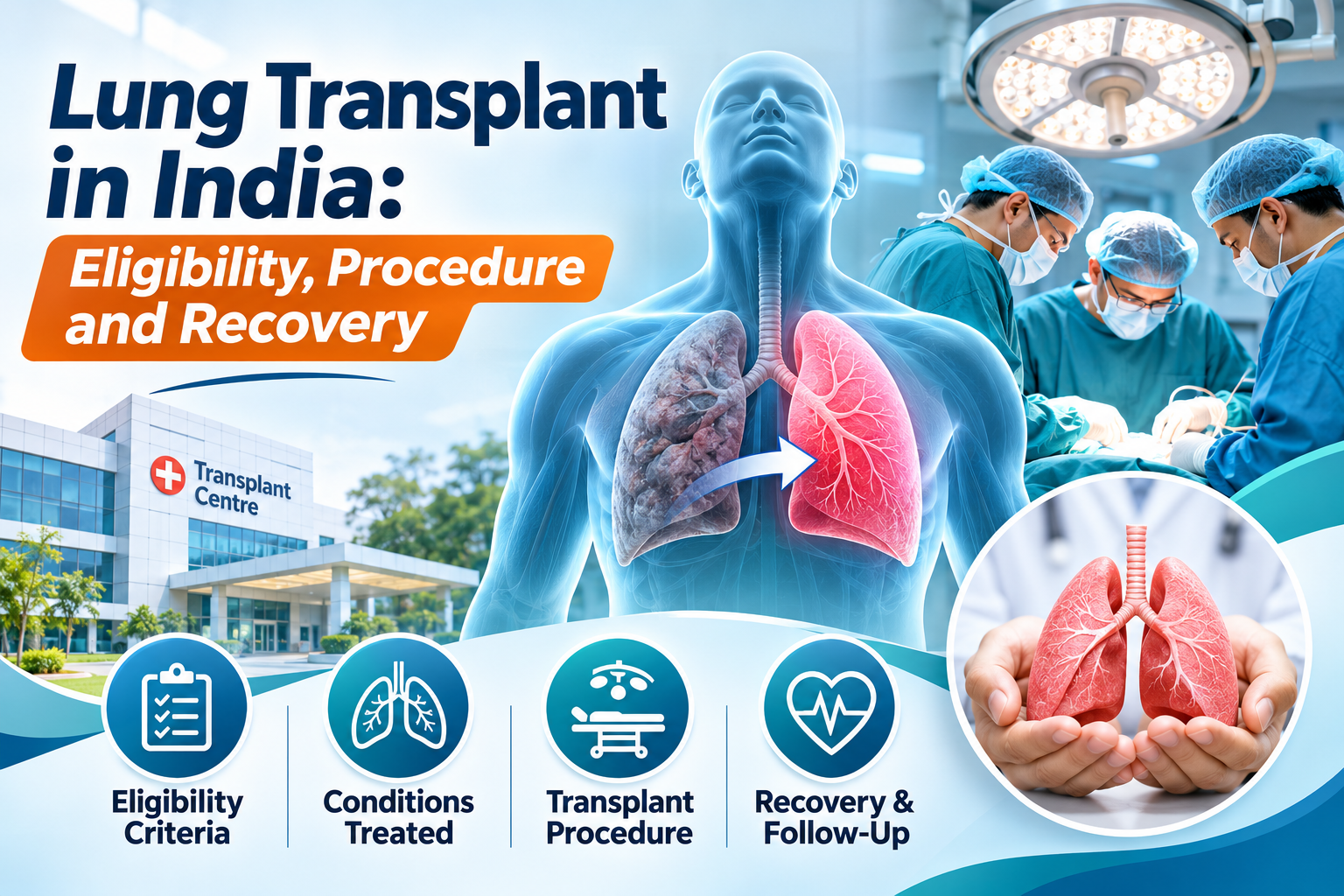
Imagine struggling to breathe even while performing simple daily activities. For people living with advanced lung diseases, medicines and other treatments may eventually become insufficient. In carefully selected cases, a lung transplant in India may offer another treatment option and the possibility of improving quality of life.
India has specialised hospitals and multidisciplinary medical teams that evaluate patients for complex organ transplant procedures. However, a lung transplant is a major surgery that requires detailed medical assessment, a suitable donor, long-term medication and regular follow-up care.
If you or a family member is exploring this treatment, understanding the eligibility criteria, procedure and recovery process can help you prepare for discussions with a transplant specialist.
What Is a Lung Transplant?
A lung transplant is a surgical procedure in which one or both diseased lungs are replaced with healthy donor lungs.
It is generally considered for patients with advanced lung disease when other available treatments are no longer providing sufficient benefit.
Depending on the patient's medical condition, doctors may recommend:
-
Single lung transplant: One diseased lung is replaced with a donor lung.
-
Double lung transplant: Both diseased lungs are replaced with donor lungs.
-
Heart-lung transplant: The heart and both lungs are replaced together in selected cases where both organs are severely affected.
The type of transplant depends on the underlying disease, the patient's overall health and the transplant team's assessment.
Which Conditions May Require a Lung Transplant?
A lung transplant may be considered for certain patients with severe, progressive lung diseases.
Some conditions include:
1. Idiopathic Pulmonary Fibrosis (IPF)
IPF is a chronic condition in which lung tissue becomes scarred and stiff. This makes it increasingly difficult for the lungs to transfer oxygen into the bloodstream.
In advanced cases, a transplant assessment may be considered.
2. Chronic Obstructive Pulmonary Disease (COPD)
COPD is a group of lung conditions that cause breathing difficulties and reduced airflow. Some patients with advanced COPD may be evaluated for transplantation when other treatments are no longer sufficient.
3. Pulmonary Hypertension
Pulmonary hypertension involves increased blood pressure in the arteries supplying the lungs. Severe cases can place significant strain on the right side of the heart.
Selected patients may be evaluated for lung or combined heart-lung transplantation.
4. Bronchiectasis
Bronchiectasis causes permanent widening and damage to the airways. It can lead to repeated lung infections, persistent coughing and breathing difficulties.
In severe cases, lung transplantation may be considered.
5. Cystic Fibrosis
Cystic fibrosis is a genetic condition that can cause thick mucus to accumulate in the lungs, leading to infections and progressive lung damage.
A transplant may be considered in selected patients with advanced disease.
Not everyone with these conditions needs a transplant. A specialist must determine whether transplantation is appropriate based on disease severity, treatment response and overall health.
Eligibility Criteria for Lung Transplant in India
Not every patient with severe lung disease is suitable for a lung transplant. The transplant team evaluates whether the patient is medically fit enough to undergo surgery and manage the long-term care that follows.
The assessment may consider the following factors:
1. Advanced Lung Disease
The patient generally needs to have a serious, progressive lung condition that has not responded adequately to available medical or surgical treatments.
2. Overall Health Condition
Doctors evaluate the patient's heart, kidneys, liver and other major organs. Significant problems affecting these organs may increase surgical risks or affect recovery.
3. Age and Physical Fitness
Age is one of several factors considered during evaluation. There is no single age limit that applies to every patient or transplant centre.
Physical condition, nutritional status and the ability to participate in rehabilitation are also important.
4. Infection Assessment
Active or uncontrolled infections may affect transplant eligibility. Doctors conduct appropriate investigations to identify and manage infection risks before surgery.
5. Medication Compliance
After transplantation, patients must take prescribed medicines regularly and attend follow-up appointments. The ability to follow the treatment plan is an important part of the assessment.
6. Psychological and Family Support
A lung transplant involves major lifestyle changes. Emotional readiness, understanding of the procedure and reliable family or caregiver support can help patients manage recovery and long-term care.
Important: Eligibility is decided individually by a multidisciplinary transplant team. Only a specialist evaluation can establish whether a patient is suitable for transplantation.
Lung Transplant Procedure: Step-by-Step Process
A lung transplant involves several stages, starting with medical evaluation and continuing through surgery and long-term monitoring.
Step 1: Initial Medical Consultation
The patient meets a pulmonologist or lung transplant specialist.
The doctor reviews the patient's medical history, previous treatments, current symptoms and available investigation reports.
If transplantation may be appropriate, the patient is referred for a detailed evaluation.
Step 2: Pre-Transplant Evaluation
Before accepting a patient for transplantation, the medical team performs several investigations.
These may include:
-
Blood tests and blood group assessment
-
Lung function tests
-
Chest X-rays and CT scans
-
Heart evaluation, including echocardiography
-
Infection screening
-
Nutritional assessment
-
Psychological evaluation
-
Assessment of other organ functions
The purpose is to understand the patient's condition and identify any factors that could affect the safety or success of the procedure.
Step 3: Transplant Team Assessment and Listing
The patient's reports are reviewed by specialists from different medical departments.
If the patient meets the required criteria, the transplant team explains the next steps, risks and donor availability process.
For deceased-donor transplantation in India, the patient must be registered and considered according to applicable organ allocation rules and procedures.
Step 4: Donor Matching
Finding a suitable donor lung is an important part of the transplant journey.
The transplant team evaluates donor lungs based on factors such as:
-
Blood group compatibility
-
Lung size
-
Medical suitability of the donor organ
-
Infection screening
-
Other clinical matching considerations
The waiting period can vary. A suitable organ may not become available immediately, and the timing cannot be guaranteed.
Step 5: Lung Transplant Surgery
Once a suitable donor lung becomes available and the transplant team approves the procedure, the patient is prepared for surgery.
The operation is performed under general anaesthesia.
The surgical team removes the diseased lung or lungs and connects the donor lung or lungs to the patient's airways and blood vessels.
The exact surgical approach and duration depend on whether a single, double or combined heart-lung transplant is being performed.
Step 6: Intensive Care Monitoring
After surgery, the patient is transferred to the intensive care unit (ICU).
The medical team closely monitors breathing, oxygen levels, circulation, organ function and early signs of complications.
Some patients may need temporary ventilator support while their new lungs and body adjust.
Recovery After Lung Transplant Surgery
Recovery is an important part of the transplant journey. It requires medical supervision, rehabilitation, medication and lifestyle adjustments.
The recovery timeline varies from patient to patient.
1. Initial Hospital Recovery
Immediately after surgery, patients receive close monitoring in the ICU.
Once their condition becomes stable, they may be transferred to a specialised transplant ward.
During this stage, doctors monitor lung function, manage pain, check for infections and assess the body's response to the transplanted organ.
The hospital stay depends on the patient's progress and whether complications occur.
2. Breathing Exercises and Physiotherapy
Pulmonary rehabilitation and physiotherapy are important parts of recovery.
Under professional supervision, patients may be encouraged to:
-
Practise breathing exercises
-
Perform prescribed physical activities
-
Gradually improve walking ability
-
Build muscle strength
-
Improve endurance
The rehabilitation programme is adjusted according to the patient's condition.
3. Medication After Transplantation
After a lung transplant, patients generally need long-term immunosuppressant medicines.
These medicines reduce the immune system's activity and help prevent the body from rejecting the transplanted lung.
Patients may also receive medicines to prevent or treat infections and manage other medical needs.
Never stop or change prescribed medication without consulting the transplant team.
4. Regular Follow-Up Appointments
Follow-up care helps doctors monitor the transplanted lungs and identify potential problems early.
Appointments may involve:
-
Blood tests
-
Chest imaging
-
Lung function tests
-
Medication reviews
-
Infection screening
-
Clinical examinations
The frequency of appointments depends on the patient's recovery and the transplant centre's protocol.
5. Long-Term Lifestyle Adjustments
Patients may need to follow certain precautions after transplantation.
These can include maintaining good hygiene, avoiding exposure to infections, following dietary recommendations, attending rehabilitation sessions and taking medication on schedule.
Any new breathing difficulty, fever or other concerning symptoms should be reported promptly to the transplant team.
Risks and Possible Complications of Lung Transplant
A lung transplant is a complex operation, and it carries significant risks.
Possible complications include:
-
Organ rejection: The immune system may recognise the donor lung as foreign and attack it.
-
Infections: Immunosuppressant medicines increase vulnerability to certain infections.
-
Bleeding: Bleeding may occur during or after surgery.
-
Primary graft dysfunction: The transplanted lungs may not function properly during the early period after surgery.
-
Airway complications: Problems may develop around the connections made during surgery.
-
Medication side effects: Long-term immunosuppressants can affect kidney function, blood pressure and other aspects of health.
-
Chronic lung allograft dysfunction: Long-term damage may affect the function of the transplanted lungs.
The risks differ between patients. The transplant team should explain the possible complications and individual risk factors before surgery.
Why Do International Patients Consider Lung Transplant Treatment in India?
Patients from different countries may explore India for specialised medical treatment.
Some factors that may influence their decision include:
Access to Specialised Hospitals
India has hospitals with dedicated transplant programmes, intensive care facilities and multidisciplinary medical teams.
Patients should verify the specific hospital's experience, transplant authorisation and available facilities before making a decision.
Medical Evaluation and Treatment Planning
International patients may seek assistance with medical report reviews, specialist consultations, treatment planning and hospital coordination.
The final treatment decision must always be made by the treating medical team after reviewing the patient's condition.
Support for International Patients
Patients travelling from another country may need assistance with appointment coordination, travel planning, accommodation and communication.
These arrangements should be discussed with the hospital or a reliable medical facilitation service before travel.
Important Considerations for International Patients
A lung transplant is not a procedure that can be planned like a routine hospital visit.
International patients should consider the following before travelling:
-
Share complete medical reports with the transplant team.
-
Ask whether an initial remote consultation is possible.
-
Confirm whether an in-person evaluation is required before a final decision.
-
Understand the donor availability and organ allocation process.
-
Check the applicable medical visa requirements.
-
Plan for an extended stay near the transplant centre if advised.
-
Arrange a caregiver who can support the patient during recovery.
-
Discuss long-term follow-up arrangements after returning home.
Patients should not travel with the assumption that a transplant will automatically be approved or that a donor organ will be immediately available.
Frequently Asked Questions (FAQs)
1. Who is eligible for a lung transplant in India?
Patients with advanced lung disease that has not responded adequately to other treatments may be considered. Eligibility depends on overall health, organ function, infection status, physical fitness and the transplant team's assessment.
2. Can both lungs be replaced during a transplant?
Yes. Depending on the patient's condition, doctors may recommend a single lung transplant or a double lung transplant. The decision depends on the underlying disease and clinical evaluation.
3. How long does recovery take after a lung transplant?
Initial hospital recovery may take several weeks, depending on the patient's condition. Regaining strength and adjusting to long-term medication can take several months or longer. Recovery timelines vary.
4. Will patients need medicines after a lung transplant?
Yes. Most patients need long-term immunosuppressant medicines to reduce the risk of organ rejection. Regular monitoring is also necessary.
5. Can international patients undergo lung transplant surgery in India?
International patients may explore transplant evaluation in India, subject to hospital policies, medical suitability, applicable legal requirements and organ allocation regulations. They should contact an authorised transplant centre before making travel arrangements.
6. Is a lung transplant a permanent cure for lung disease?
No. A lung transplant is not considered a guaranteed or permanent cure. It may improve survival and quality of life for selected patients, but rejection, infection and other complications can occur.
7. How long can a patient wait for a donor lung?
The waiting period varies depending on donor availability, compatibility, medical urgency and applicable allocation rules. There is no guaranteed waiting time.
Conclusion
A lung transplant in India may be an important treatment option for selected patients with advanced lung disease when other treatments are no longer sufficient.
Understanding eligibility, donor matching, surgery, recovery and long-term medication can help patients and families prepare for this complex medical journey.
The most important step is to consult an experienced lung transplant team, obtain a detailed medical evaluation and understand the benefits and risks before making a decision.
For medical treatment guidance and assistance with exploring treatment options in India, visit AlBadr Cure and discuss your requirements with the appropriate medical professionals.
Medical Disclaimer: This article is intended for general educational purposes only. It does not replace professional medical advice, diagnosis or treatment. Lung transplant eligibility, surgical decisions and treatment plans must be determined by qualified transplant specialists after a detailed evaluation of the individual patient.