
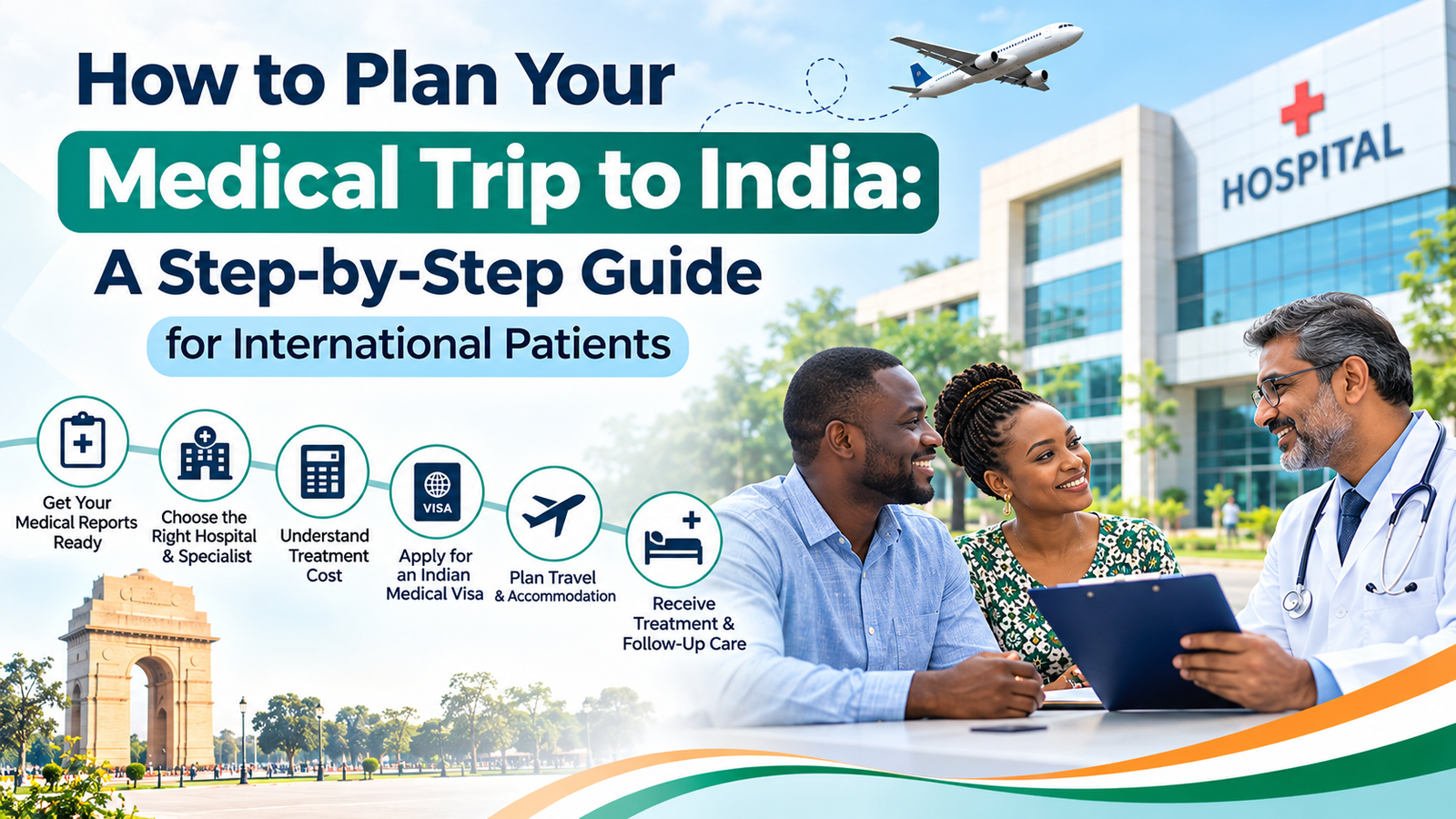
Planning medical treatment in another country can feel overwhelming. From choosing the right hospital to arranging a medical visa, flights, and accommodation, every step requires proper preparation. For international patients considering India, having a clear plan can make the entire journey easier.
India has become an important destination for international healthcare, offering specialised hospitals, experienced medical professionals, and treatment options across several medical fields.
Patients from Nigeria, Kenya, Ghana, Ethiopia, Tanzania, Uganda, and other countries explore India for treatments such as cancer care, heart surgery, knee replacement, IVF, and neurosurgery.
However, travelling abroad for medical treatment involves more than booking a flight. You need to organise your medical records, consult specialists, understand treatment costs, and prepare for recovery.
In this guide, we explain how to plan a medical trip to India step by step.
Why Do International Patients Choose India for Medical Treatment?
India offers a wide range of healthcare services for international patients.
Here are some reasons why patients consider India for their medical journey.
1. Specialised Medical Services
Indian hospitals provide treatment across different specialities, including oncology, cardiology, orthopaedics, neurology, fertility care, and organ transplantation.
Patients can explore hospitals and specialists according to their medical requirements.
2. Experienced Medical Professionals
India has qualified doctors and medical specialists with experience in treating different health conditions.
International patients can review a doctor's qualifications, speciality, experience, and hospital affiliation before making a decision.
3. Modern Hospital Facilities
Many Indian hospitals offer advanced diagnostic equipment, specialised surgical facilities, intensive care units, and rehabilitation services.
The availability of these facilities depends on the hospital and its speciality.
4. International Patient Support
Several hospitals and medical travel facilitators assist international patients with appointments, accommodation, airport transfers, interpreters, and medical documentation.
This support can help make medical travel more organised.
Step-by-Step Guide to Planning Your Medical Trip to India
Planning ahead can help you avoid unnecessary delays and confusion.
Follow these steps before travelling.
Step 1: Identify Your Medical Treatment Requirements
The first step is understanding your medical condition and the type of treatment you may need.
If you have already received a diagnosis in your home country, collect all relevant medical information.
This may include:
-
Previous medical reports
-
Blood test results
-
MRI, CT scan, or X-ray reports
-
Biopsy reports, if applicable
-
Previous prescriptions
-
Details of ongoing medication
-
Medical history and previous surgeries
These documents help doctors understand your condition and provide an initial medical opinion.
Do not stop or change prescribed medication without consulting your doctor.
Step 2: Choose the Right Hospital and Specialist
Selecting the right hospital is one of the most important decisions when planning medical treatment abroad.
Different hospitals may specialise in different medical conditions.
For example:
-
Cancer patients may need an oncology hospital.
-
Heart patients may require a specialised cardiac centre.
-
Joint problems may require an experienced orthopaedic specialist.
-
Couples exploring fertility treatment may need an IVF centre.
-
Patients with neurological conditions may require a neurology or neurosurgery department.
Before choosing a hospital, check its facilities, relevant accreditation, specialist qualifications, and experience with your condition.
Step 3: Share Your Medical Reports for Evaluation
Once you identify suitable hospitals or specialists, share your medical reports for an initial evaluation.
Doctors may review your documents and provide information about:
-
Possible treatment options
-
Additional investigations required
-
Estimated treatment duration
-
Expected hospital stay
-
Preliminary treatment cost
-
Possible risks and recovery requirements
Remember that an initial online opinion is not always a final diagnosis. The treatment plan may change after physical examination and further investigations in India.
Step 4: Understand the Treatment Cost
Budget planning is an important part of medical travel.
Before confirming your trip, request a written treatment estimate from the hospital or authorised medical service provider.
Your overall expenses may include:
-
Doctor consultation charges
-
Diagnostic investigations
-
Hospital admission
-
Surgery or treatment procedures
-
Medicines and medical supplies
-
Hospital stay
-
Follow-up consultations
-
Accommodation and food
-
Flights and local transportation
Ask whether the estimate includes all major expenses or whether additional charges may apply.
It is also wise to keep an emergency financial reserve for unexpected medical or travel expenses.
Step 5: Apply for an Indian Medical Visa
After receiving medical guidance and the required hospital documentation, check the applicable Indian visa requirements.
International patients travelling specifically for medical treatment may be eligible to apply for an Indian Medical Visa, subject to government rules.
Commonly required documents may include:
-
Valid passport
-
Recent passport-size photograph
-
Medical reports from the home country
-
Hospital invitation or appointment letter
-
Treatment-related documents
-
Completed visa application
Depending on the applicable rules, an accompanying attendant may also be eligible for a Medical Attendant Visa.
Visa requirements and eligibility can change. Always check the latest information through the official Indian visa portal before applying.
Step 6: Arrange Flights and Accommodation
Once your visa and medical appointment are confirmed, start planning your travel arrangements.
Book Your Flights
Choose flights according to your medical condition and the hospital appointment schedule.
Patients who have undergone major procedures or have serious health conditions should consult their treating doctor about fitness to fly.
Select Suitable Accommodation
Accommodation depends on the expected treatment duration and the patient's recovery requirements.
Available options may include:
-
Hotels near the hospital
-
Serviced apartments
-
Guest houses
-
Hospital-supported accommodation options
If the patient is travelling with family members, consider their accommodation and transportation requirements as well.
Step 7: Plan Airport Transfers and Local Transportation
After arriving in India, patients may need transportation between the airport, hotel, and hospital.
Planning airport pickup and local travel in advance can reduce last-minute difficulties.
Keep the following details ready:
-
Hospital address
-
Doctor's appointment details
-
Accommodation address
-
Emergency contact numbers
-
Local transportation arrangements
If required, arrange an interpreter to help with communication during hospital visits.
Step 8: Complete Hospital Admission and Treatment
After reaching the hospital, the medical team may conduct further examinations and investigations.
The treating doctor will review your medical condition and discuss the recommended treatment.
Before proceeding, make sure you understand:
-
The proposed treatment procedure
-
Potential benefits and risks
-
Alternative treatment options
-
Expected hospital stay
-
Recovery requirements
-
Estimated expenses
Patients should receive clear medical explanations and provide informed consent before treatment.
Step 9: Focus on Recovery and Follow-Up Care
Recovery is an important part of the medical journey.
Depending on the treatment, patients may need medication, rehabilitation, follow-up consultations, or additional investigations.
Before returning home, ask the hospital for:
-
Discharge summary
-
Medical reports
-
Surgery or procedure details
-
Prescribed medicines
-
Follow-up schedule
-
Rehabilitation instructions
-
Emergency contact information
Discuss your fitness to fly with your treating doctor before booking your return journey.
Common Mistakes to Avoid When Planning Medical Travel to India
Even with proper preparation, international patients can face challenges if important details are overlooked.
Here are some common mistakes to avoid.
1. Travelling Without Proper Medical Reports
Incomplete medical records may delay the initial evaluation and treatment planning.
2. Choosing a Hospital Only Based on Price
Treatment costs are important, but hospital facilities, doctor experience, patient safety, and treatment suitability should also be considered.
3. Ignoring Visa Requirements
Applying without the correct medical documentation may create unnecessary delays.
4. Not Planning Accommodation
Patients undergoing long-term treatment may require accommodation close to the hospital.
5. Ignoring Post-Treatment Care
Recovery does not always end when hospital treatment is completed. Proper follow-up planning is essential, especially for patients returning to another country.
How Al Badr Cure Helps International Patients Plan Their Medical Trip
Planning medical treatment in a foreign country involves several arrangements. Al Badr Cure helps international patients navigate this process with appropriate coordination and guidance.
Its support services include:
-
Hospital and specialist selection assistance
-
Medical report coordination
-
Online consultation arrangements
-
Treatment cost estimate coordination
-
Medical visa documentation assistance
-
Accommodation guidance
-
Airport pickup and drop-off coordination
-
Local transportation assistance
-
Language interpretation support
-
Post-treatment follow-up coordination
Whether you are travelling from Nigeria, Ghana, Kenya, Ethiopia, Tanzania, or another country, Al Badr Cure aims to make the medical travel process more convenient and organised.
Conclusion
Planning a medical trip to India requires careful preparation, from selecting the right hospital to arranging travel, accommodation, and post-treatment care.
International patients should begin by collecting their medical reports, consulting qualified specialists, understanding treatment costs, and checking the applicable visa requirements.
A well-organised medical journey can help patients and their families feel more prepared throughout the process.
With the right coordination and guidance, Al Badr Cure helps international patients explore healthcare options in India and plan their medical travel with greater confidence.
Frequently Asked Questions (FAQs)
1. How can I plan a medical trip to India?
Start by collecting your medical reports, identifying suitable hospitals, obtaining an initial medical opinion, understanding treatment costs, checking visa requirements, and arranging flights and accommodation.
2. Which countries can send patients to India for medical treatment?
Patients from Nigeria, Kenya, Ghana, Ethiopia, Tanzania, Uganda, and many other countries can explore medical treatment in India, subject to applicable visa and travel requirements.
3. What documents are required for a medical trip to India?
Common documents include a valid passport, medical reports, prescriptions, diagnostic records, hospital appointment or invitation letter, and applicable visa documents.
4. How much does medical treatment in India cost?
Treatment costs depend on the medical condition, hospital, specialist, procedure, hospital stay, and additional services. Patients should request an individualised written estimate.
5. Can I bring a family member with me to India?
Depending on the applicable visa rules, eligible patients may be able to travel with medical attendants. Check the current Medical Attendant Visa requirements before applying.
6. How long should I stay in India after medical treatment?
The required stay depends on the procedure, recovery progress, and doctor's recommendations. Always obtain medical clearance before planning your return journey.
7. Does Al Badr Cure help with medical travel arrangements?
Al Badr Cure assists international patients with hospital coordination, consultations, visa documentation guidance, accommodation, transportation, and follow-up arrangements.