
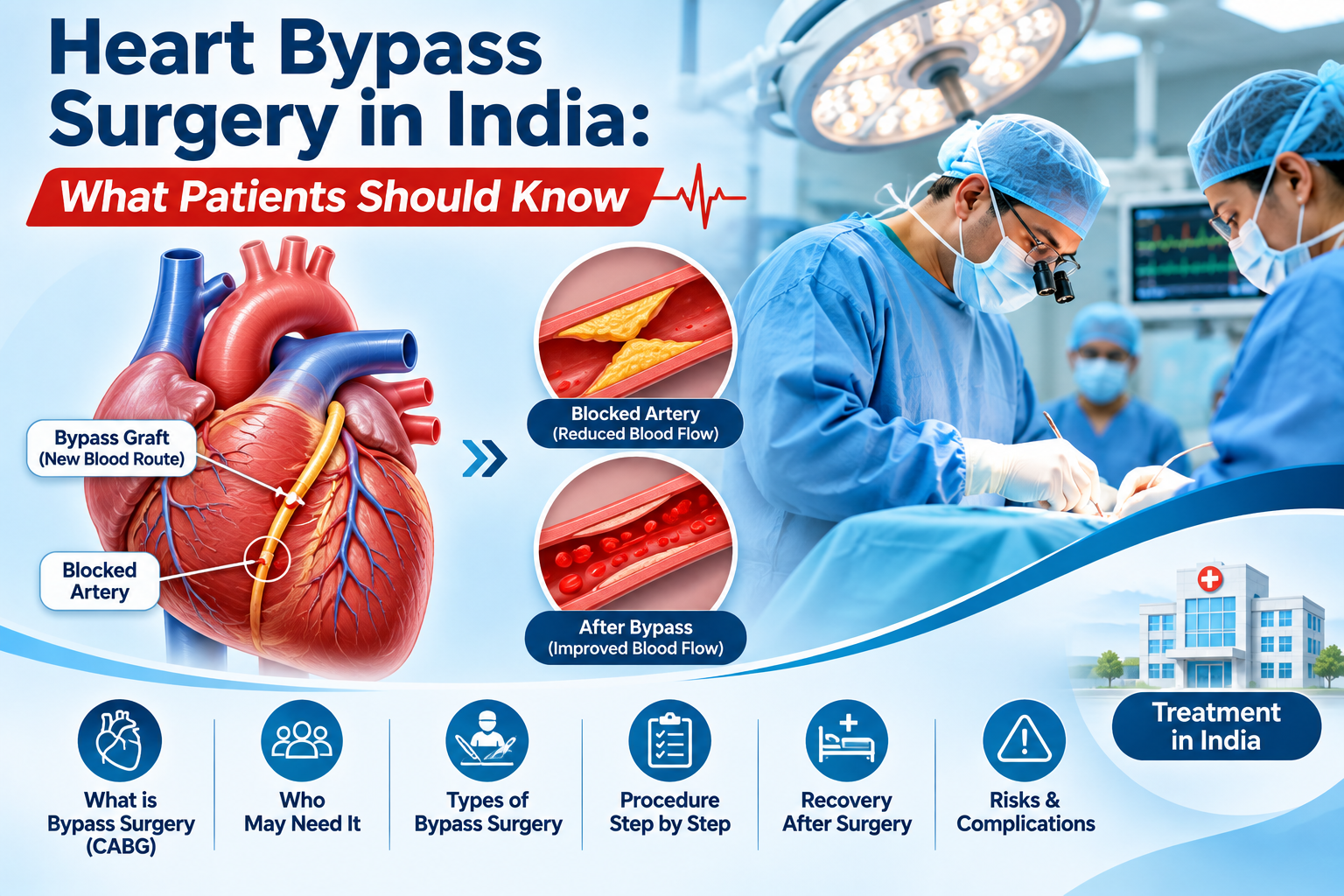
Imagine experiencing chest pain, breathlessness or tiredness even during everyday activities. These symptoms can sometimes be linked to blocked heart arteries. When the blood supply to the heart becomes significantly restricted, doctors may recommend Heart Bypass Surgery in India as a treatment option for selected patients.
Heart bypass surgery is a major cardiac procedure used to improve blood flow to the heart. It is commonly recommended for certain patients with coronary artery disease, particularly when multiple arteries are narrowed or blocked.
India has hospitals offering specialised cardiac surgery, intensive care and rehabilitation services. However, choosing the right treatment requires a detailed medical evaluation and consultation with an experienced cardiac team.
In this guide, we will explain heart bypass surgery, its indications, procedure, recovery, possible risks and important considerations for international patients.
What Is Heart Bypass Surgery?
Heart bypass surgery is medically known as Coronary Artery Bypass Grafting (CABG).
The procedure is performed to improve blood flow to the heart when the coronary arteries become narrowed or blocked due to coronary artery disease.
During surgery, a healthy blood vessel is taken from another part of the patient's body and used to create a new route for blood to flow around the blocked section of an artery.
Depending on the patient's condition, doctors may recommend:
-
Single bypass: One coronary artery is bypassed.
-
Double bypass: Two coronary arteries are bypassed.
-
Triple bypass: Three coronary arteries are bypassed.
-
Quadruple bypass: Four coronary arteries are bypassed.
The number of bypasses depends on the location and extent of the blockages. More bypasses do not automatically mean a better outcome; the surgical plan is based on individual anatomy and medical needs.
Why Is Heart Bypass Surgery Required?
The heart needs a continuous supply of oxygen-rich blood to function properly. Coronary arteries carry this blood to the heart muscle.
When fatty deposits called plaque build up inside these arteries, they can become narrow or blocked. This condition is known as coronary artery disease.
Common symptoms may include:
-
Chest pain or pressure (angina)
-
Shortness of breath
-
Unusual tiredness
-
Discomfort in the arms, neck, jaw or back
-
Reduced ability to perform physical activities
Some patients may not experience noticeable symptoms until the disease becomes advanced.
Heart bypass surgery may be considered when medication or other treatments are not sufficient, or when the pattern of coronary artery disease makes bypass surgery a suitable option.
Who May Need Heart Bypass Surgery?
Not every patient with blocked heart arteries requires bypass surgery. The decision depends on the severity of the disease and the patient's overall health.
Doctors may consider CABG in certain situations, including:
1. Multiple Blocked Arteries
Patients with significant blockages in several coronary arteries may be evaluated for bypass surgery.
2. Left Main Coronary Artery Disease
The left main coronary artery supplies blood to a large portion of the heart. Significant narrowing in this artery may require specialised treatment planning.
3. Diabetes with Coronary Artery Disease
Some patients with diabetes and complex multivessel coronary artery disease may benefit from bypass surgery. The decision depends on their individual clinical condition.
4. Severe Coronary Artery Disease
Patients with complex blockages that are not suitable for angioplasty and stenting may be considered for CABG.
5. Previous Treatment Has Not Been Successful
In selected cases, bypass surgery may be considered when previous procedures have not provided an adequate solution.
A cardiologist and cardiac surgeon should evaluate the patient's reports together before recommending a treatment.
Types of Heart Bypass Surgery
Different surgical techniques may be used depending on the patient's condition and the surgeon's assessment.
1. Traditional On-Pump Bypass Surgery
In this method, a heart-lung machine temporarily takes over the function of the heart and lungs during surgery.
The surgeon can operate on the heart while blood circulation is maintained through the machine.
2. Off-Pump Bypass Surgery
Off-pump CABG is also called beating-heart surgery.
In this technique, the surgeon performs the bypass while the heart continues beating. A heart-lung machine is generally not used.
This approach may be suitable for selected patients, depending on their coronary anatomy and clinical condition.
3. Minimally Invasive Bypass Surgery
In selected cases, bypass surgery may be performed through smaller incisions instead of the traditional large chest incision.
However, this technique is not appropriate for every patient. The number and location of blockages, along with other medical factors, influence whether it can be considered.
Heart Bypass Surgery Procedure: Step by Step
The exact procedure varies depending on the patient's condition and the surgical technique used.
Step 1: Medical Evaluation
Before surgery, doctors review the patient's medical history, symptoms and previous treatment.
Investigations may include:
-
Electrocardiogram (ECG)
-
Echocardiography
-
Coronary angiography
-
Blood tests
-
Chest X-ray
-
Kidney function tests
-
Other investigations as required
These tests help the medical team understand the heart's condition and plan the procedure.
Step 2: Preparation for Surgery
The patient is prepared for surgery under medical supervision.
The anaesthesia team reviews the patient's health, explains the anaesthesia process and provides instructions regarding medicines, food and fluids before the operation.
Step 3: Collecting the Blood Vessel Graft
The surgeon takes a healthy blood vessel from another part of the body.
Common sources include:
-
Internal mammary artery from the chest
-
Radial artery from the arm
-
Saphenous vein from the leg
The choice depends on the patient's condition and the surgeon's plan.
Step 4: Creating the Bypass
The surgeon connects the selected blood vessel to the coronary artery beyond the blocked section.
This creates an alternative route for blood to reach the heart muscle.
Step 5: Closing the Surgical Incisions
After completing the bypass grafts, the surgeon closes the surgical incisions.
The patient is then transferred to the intensive care unit for close monitoring.
A traditional CABG procedure commonly takes around 3 to 6 hours, although the duration varies depending on its complexity.
Recovery After Heart Bypass Surgery
Recovery is an important part of the treatment process. Patients require medical monitoring, prescribed medication and gradual physical rehabilitation.
The recovery timeline differs according to age, overall health, surgical technique and whether complications occur.
1. Intensive Care Monitoring
After surgery, patients are usually moved to the cardiac intensive care unit (ICU).
The medical team monitors:
-
Heart rate and rhythm
-
Blood pressure
-
Oxygen levels
-
Breathing
-
Kidney function
-
Surgical wounds
Some patients may temporarily require ventilator support until they can breathe independently.
2. Hospital Stay
Many patients stay in the hospital for approximately a week, depending on their recovery and medical condition.
Doctors and nurses monitor the patient's progress and gradually help them start moving and walking.
3. Recovery at Home
After discharge, patients need adequate rest and should follow the care team's instructions.
They may experience tiredness, discomfort around the surgical wound and reduced physical strength during the initial recovery period.
Most patients gradually return to many normal activities over approximately 6 weeks, while full recovery after traditional surgery commonly takes around 2 to 3 months.
4. Cardiac Rehabilitation
Cardiac rehabilitation is an important part of recovery.
It may include:
-
Supervised physical activity
-
Breathing exercises
-
Heart-health education
-
Nutritional guidance
-
Support for managing risk factors
The rehabilitation programme should be followed according to the treating doctor's recommendations.
5. Long-Term Medication and Follow-Up
Patients may need long-term medication to reduce the risk of further heart problems.
Depending on their condition, doctors may prescribe medicines to manage cholesterol, blood pressure and blood clotting risk.
Regular follow-up appointments help monitor heart health and recovery.
Patients should never stop or change prescribed medication without medical advice.
Risks and Possible Complications of Heart Bypass Surgery
Heart bypass surgery is a major operation, and like other major surgeries, it carries certain risks.
Possible complications include:
-
Bleeding: Blood loss may occur during or after surgery.
-
Infection: The chest or graft-harvesting wound may become infected.
-
Irregular heartbeat: Some patients may develop temporary heart rhythm problems.
-
Kidney problems: Surgery may affect kidney function, particularly in patients with existing kidney disease.
-
Stroke: A stroke is a possible but serious complication.
-
Heart attack: A heart attack may occur during or after the procedure.
-
Memory or concentration problems: Some patients experience temporary changes in memory or thinking.
The risk level varies from patient to patient. Age, diabetes, kidney disease, heart function and whether surgery is performed as an emergency can influence individual risk.
The cardiac surgeon should explain the potential benefits, risks and alternative treatments before surgery.
Why Do International Patients Consider Heart Bypass Surgery in India?
Patients from different countries may explore India for specialised cardiac treatment.
Some factors they may consider include:
1. Access to Specialised Cardiac Care
India has hospitals with cardiac surgery departments, intensive care units and multidisciplinary heart teams.
Patients should independently verify the hospital's cardiac surgery facilities, specialist credentials and treatment capabilities.
2. Medical Evaluation and Treatment Planning
International patients may seek assistance with reviewing medical reports, arranging specialist consultations and understanding available treatment options.
The final decision about surgery must be made by the treating cardiac team.
3. Support for International Patients
Travelling for major surgery involves more than hospital admission.
International patients may need help coordinating consultations, accommodation, travel arrangements and communication with healthcare providers.
These arrangements should be planned before travelling.
Important Things International Patients Should Know Before Travelling to India
If you are considering heart bypass surgery in India, preparation is essential.
Keep the following points in mind:
-
Collect recent medical reports and coronary angiography images.
-
Share your medical history and current medication details.
-
Ask whether an initial online consultation is available.
-
Understand the proposed treatment and possible alternatives.
-
Request a detailed estimate of hospital and treatment expenses.
-
Confirm the expected hospital stay and recovery arrangements.
-
Check medical visa requirements.
-
Discuss how follow-up care will be managed after returning home.
Do not book travel or assume that surgery will be recommended before the medical team has evaluated your condition.
Frequently Asked Questions (FAQs)
1. What is heart bypass surgery?
Heart bypass surgery, also called CABG, is a procedure in which a healthy blood vessel is used to create an alternative route for blood to flow around a narrowed or blocked coronary artery.
2. Who needs heart bypass surgery?
Patients with certain types of severe or complex coronary artery disease may require bypass surgery. The decision depends on the number and location of blockages, heart function and overall health.
3. How long does heart bypass surgery take?
Traditional heart bypass surgery commonly takes around 3 to 6 hours. The duration depends on the complexity of the procedure and the number of bypass grafts required.
4. How long does it take to recover after bypass surgery?
Many patients return to several normal activities within approximately 6 weeks. Full recovery after traditional surgery commonly takes 2 to 3 months, although individual recovery times vary.
5. Is heart bypass surgery better than angioplasty?
Neither procedure is universally better. The choice depends on the patient's coronary anatomy, number of blockages, associated medical conditions and overall treatment goals. A cardiologist and cardiac surgeon can help determine the suitable option.
6. Can international patients undergo heart bypass surgery in India?
International patients may explore cardiac treatment in India, subject to medical evaluation, hospital requirements and applicable travel regulations.
7. Will patients need medicines after bypass surgery?
Yes. Many patients require long-term medication to manage cholesterol, blood pressure and other heart-related risk factors. Medication plans must be determined by the treating doctor.
8. Can heart bypass surgery cure coronary artery disease permanently?
Bypass surgery improves blood flow around blocked sections of coronary arteries, but it does not remove the underlying tendency to develop coronary artery disease. Continued medication, lifestyle changes and regular medical follow-up remain important.
Conclusion
Heart bypass surgery in India can be a treatment option for patients with certain forms of severe coronary artery disease.
Understanding the procedure, eligibility, recovery process and possible complications can help patients and their families prepare for treatment.
The most important step is to consult an experienced cardiologist and cardiac surgeon, review the available treatment options and make a decision based on individual medical needs.
If you are exploring cardiac treatment options in India, visit AlBadr Cure to learn more about medical treatment guidance and assistance for international patients.
Medical Disclaimer: This article is intended for general educational purposes only. It does not replace professional medical advice, diagnosis or treatment. Heart bypass surgery may not be suitable for every patient. The decision to undergo surgery must be made by qualified cardiologists and cardiac surgeons after reviewing the patient's medical condition, investigations and treatment options.